Can a Speech Therapist Help With Reading? Here’s What Parents Should Know
When parents think about reading support, they often picture classroom teachers, tutors, or reading specialists. But there’s another professional who can make a powerful difference in a child’s reading development: speech-language pathologists (SLPs).
SLPs are experts in both language and speech sounds, which makes SLPs uniquely equipped to help children who are struggling with reading.
Why?
SLPs Support the Language Behind Reading
First, reading begins with language. Before kids can read words on a page, they need strong language skills. Vocabulary development and sentence structure are important for future reading skills. For example, if a child reads the word “cat,” we want them to picture the animal. If they read “brush,” we want them to understand that “brush” could be a noun or a verb - the sentence structure will tell us which one!
Speech Sounds and Letters go hand-in-hand
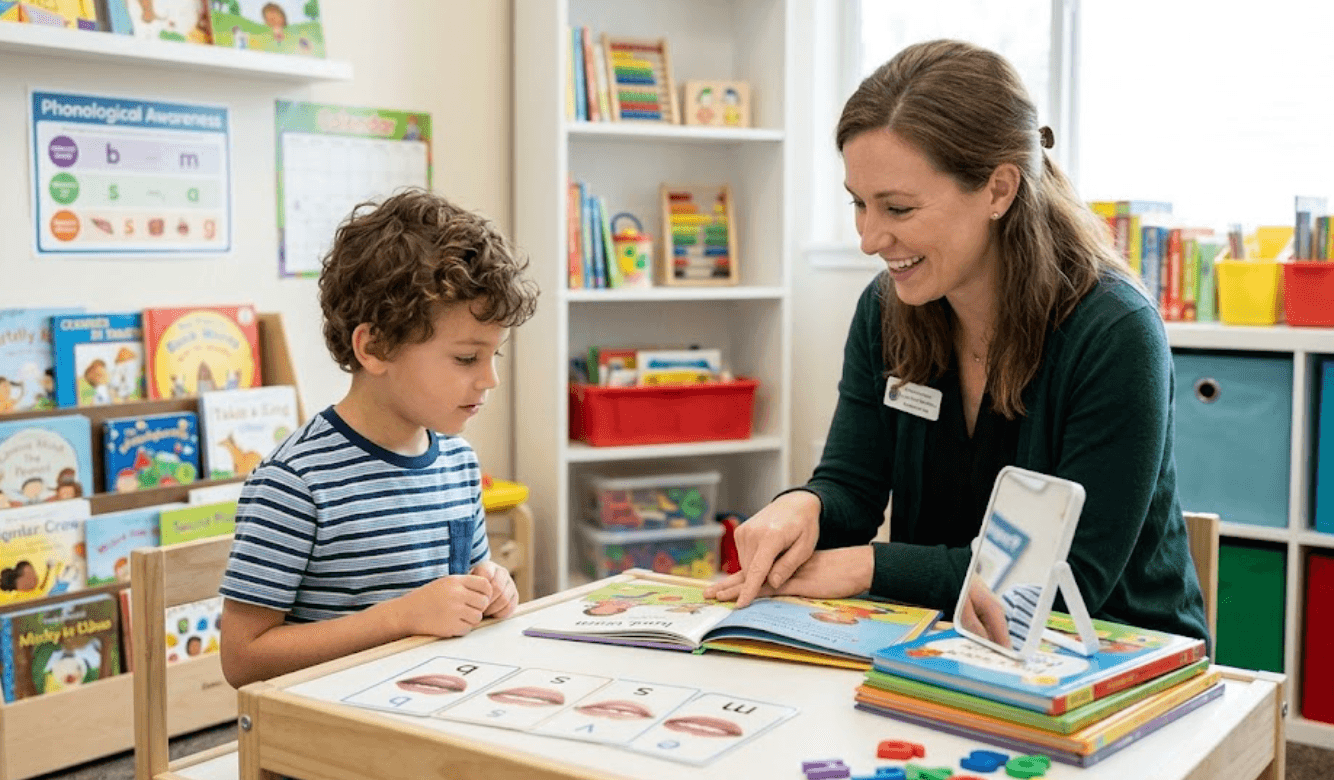
Second, reading requires phonological and phonemic awareness. Before a child can “sound out” a word, they need to be able to listen for sounds, understand that these sounds make up words, and connect sounds to their written forms: letters.
SLPs help kids become sound detectives—learning to hear, play with, and change sounds in words. If a child is having difficulty saying specific sounds, such as /k/ and /g/, /l/, or /r/, SLPs can support accurate articulation, which in turn translates to accurate decoding and reading!
Early Support Makes a Big Difference
When reading challenges are identified early, intervention can prevent small struggles from turning into long-term difficulties. SLPs often work with preschoolers and early elementary students to develop the language and sound-awareness skills that prepare them for reading success.
Learning Through Play
One of the best parts about SLP sessions for preschoolers and kindergarteners? They often look a lot like playtime!
Kids might practice reading-related skills while:
-Playing board games
-Acting out stories
-Using puppets or toys
Play keeps kids engaged and when kids are having fun, learning sticks!
The Big Takeaway
Learning to read requires both speech sound and language skills! SLPs are experts in these areas, which makes them uniquely equipped to help children who are struggling with reading. Instead of working with multiple professionals, SLPs can support children with language development, speech sound production, and letter-sound correspondence all at once!
As SLPs, we love helping to set the stage for confident, happy readers. For preschoolers and kindergarteners, that journey can start with something as simple—and joyful—as playing with words.
Interested in learning more about supporting independence or how working with an SLP could help? Speech on the Slope supports children and families throughout South and Northwest Brooklyn, helping kids build communication skills and confidence in everyday life.
Have questions about your child's speech or language development?
Get in Touch