How Many Words Should My 2-Year-Old Be Saying?
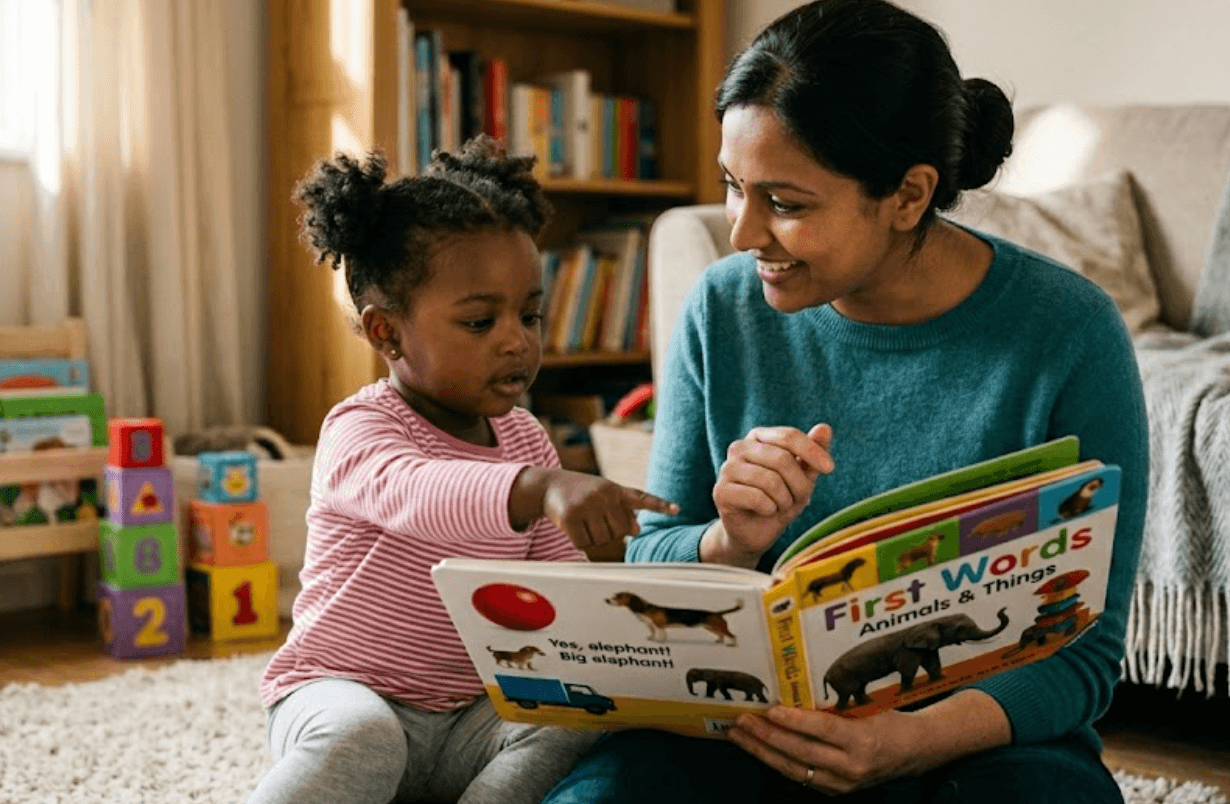
A Guide to Toddler Speech Milestones
As speech-language pathologists serving families throughout Brooklyn, one of the most common questions we hear is:
"How many words should my 2-year-old be saying?"
If you've found yourself counting your toddler's words, comparing them to other children at the playground, or searching Google late at night, you're not alone.
The good news? Language development can vary from child to child. While word counts matter, they are only one piece of the communication puzzle.
Understanding Receptive vs. Expressive Language
When we talk about toddler speech milestones, it's important to understand that communication consists of two different skills:
Receptive Language: What Your Child Understands
Receptive language refers to your child's ability to understand words, directions, and language.
Examples include:
- Following simple directions like "Get your shoes"
- Pointing to familiar objects when named
- Identifying body parts
- Understanding simple questions
- Responding to their name
Most toddlers understand far more words than they can say. In fact, language comprehension typically develops before spoken language.
Expressive Language: What Your Child Says
Expressive language refers to how your child communicates their thoughts, wants, and needs.
This may include:
- Spoken words
- Word combinations
- Animal sounds
- Signs or gestures
- Facial expressions
- Pointing and showing
When parents ask about vocabulary size, they're usually referring to expressive language.
So.. How Many Words Should a 2-Year-Old Say?
Research suggests that the average 24-month-old has a vocabulary of approximately 200 to 300 words, although there is significant variation from child to child. Some toddlers may be using fewer words, while others may have vocabularies well over 500 words. In addition to growing their vocabulary, most 2-year-olds are beginning to combine words into simple phrases such as "more milk," "mommy up," or "big truck."
The Bigger Question: How Is Your Child Communicating?
A toddler with 75 words who is constantly communicating, pointing, imitating, and combining new words may be developing very differently than a toddler with a similar vocabulary who rarely initiates communication or struggles to understand language. That's why the quality of communication is often just as important as the quantity of words.
Consider these questions:
Does your child:
- Point to things they want?
- Show you interesting objects?
- Use gestures such as waving, reaching, or nodding?
- Make eye contact during interactions?
- Attempt to imitate sounds or words?
- Babble frequently using a variety of sounds?
- Bring you toys or books to share?
- Respond when you talk to them?
These early communication skills are incredibly important. Because there is such a wide range of typical development, speech-language pathologists do not focus on word count alone. Instead, we look at the whole picture, including how a child understands language, uses gestures, engages socially, plays, and attempts to communicate their wants, needs, and ideas.
What Is a "Late Talker"?
A "late talker" is typically a toddler who has delayed expressive language but otherwise appears to be developing typically.
One commonly used definition is:
- Fewer than 50 words at 24 months
- Not yet combining two words together
- Age-appropriate understanding skills and play skills
Some late talkers catch up independently over time. Others benefit from early intervention and speech therapy support. Because it can be difficult to predict which children will catch up on their own, it's always worth discussing concerns with your pediatrician or a speech-language pathologist.
When Should Parents Seek an Evaluation?
Consider reaching out to a speech-language pathologist if your 2-year-old:
- Uses very few words
- Is not combining words into simple phrases
- Has difficulty understanding simple directions
- Rarely uses gestures such as pointing or showing
- Has limited eye contact or social interaction
- Seems frustrated when trying to communicate
- Has experienced frequent ear infections or hearing concerns
Remember: seeking an evaluation does not automatically mean your child needs therapy. Sometimes parents simply gain reassurance, guidance, and strategies to support communication at home.
The Bottom Line
If you're wondering how many words your 2-year-old should be saying, remember that while 50 words and emerging two-word combinations is often cited as a developmental milestone, it is considered a minimum benchmark rather than the average. Many 2-year-olds are using hundreds of words and are beginning to combine them into short phrases and simple sentences.
That said, communication is about much more than vocabulary alone. A child's understanding of language, use of gestures, social engagement, play skills, and attempts to communicate all provide valuable information about their development.
Rather than focusing solely on the number of words your child says, consider how they are connecting with and communicating with the people around them. Looking at the whole picture provides the most meaningful insight into their communication growth.
If something feels off, trust your instincts. Early support can make a meaningful difference, and getting answers sooner can provide peace of mind.
Concerned About Your Toddler's Speech?
Speech on the Slope provides speech and language evaluations and therapy for children and families throughout South and Northwest Brooklyn. If you have questions about your child's communication development, we're happy to help you determine whether their skills are on track and discuss next steps. Contact us to schedule a consultation.
Have questions about your child's speech or language development?
Get in Touch